

2026 Ford Ranger vs. Competitors
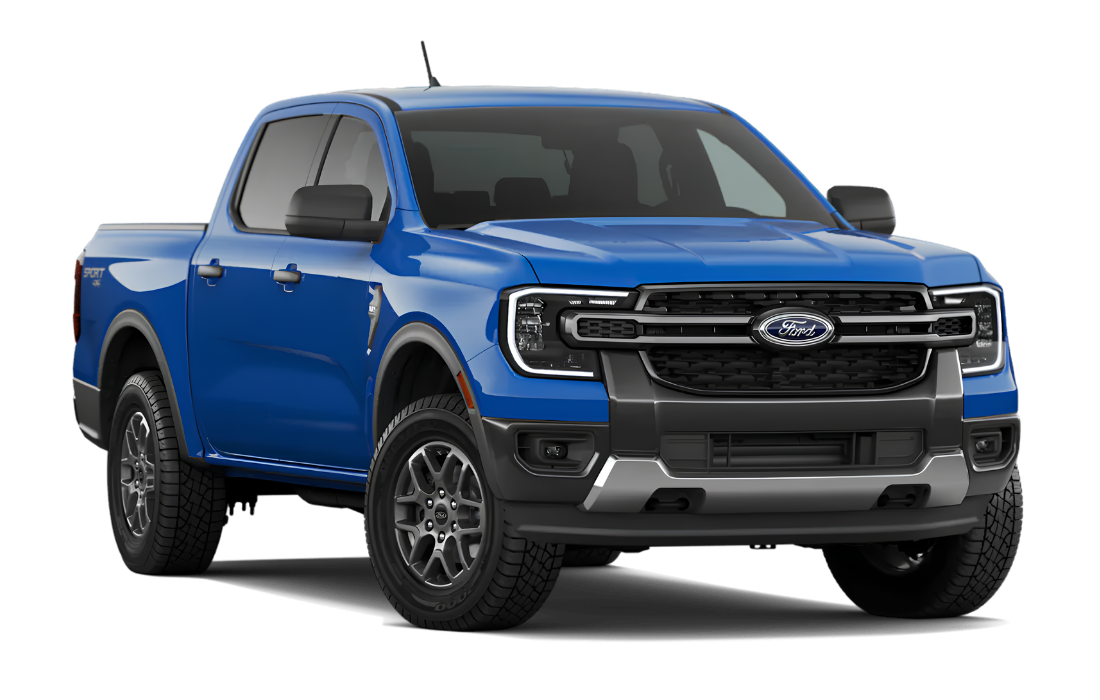
2026 Ford Ranger
vs. Competitors
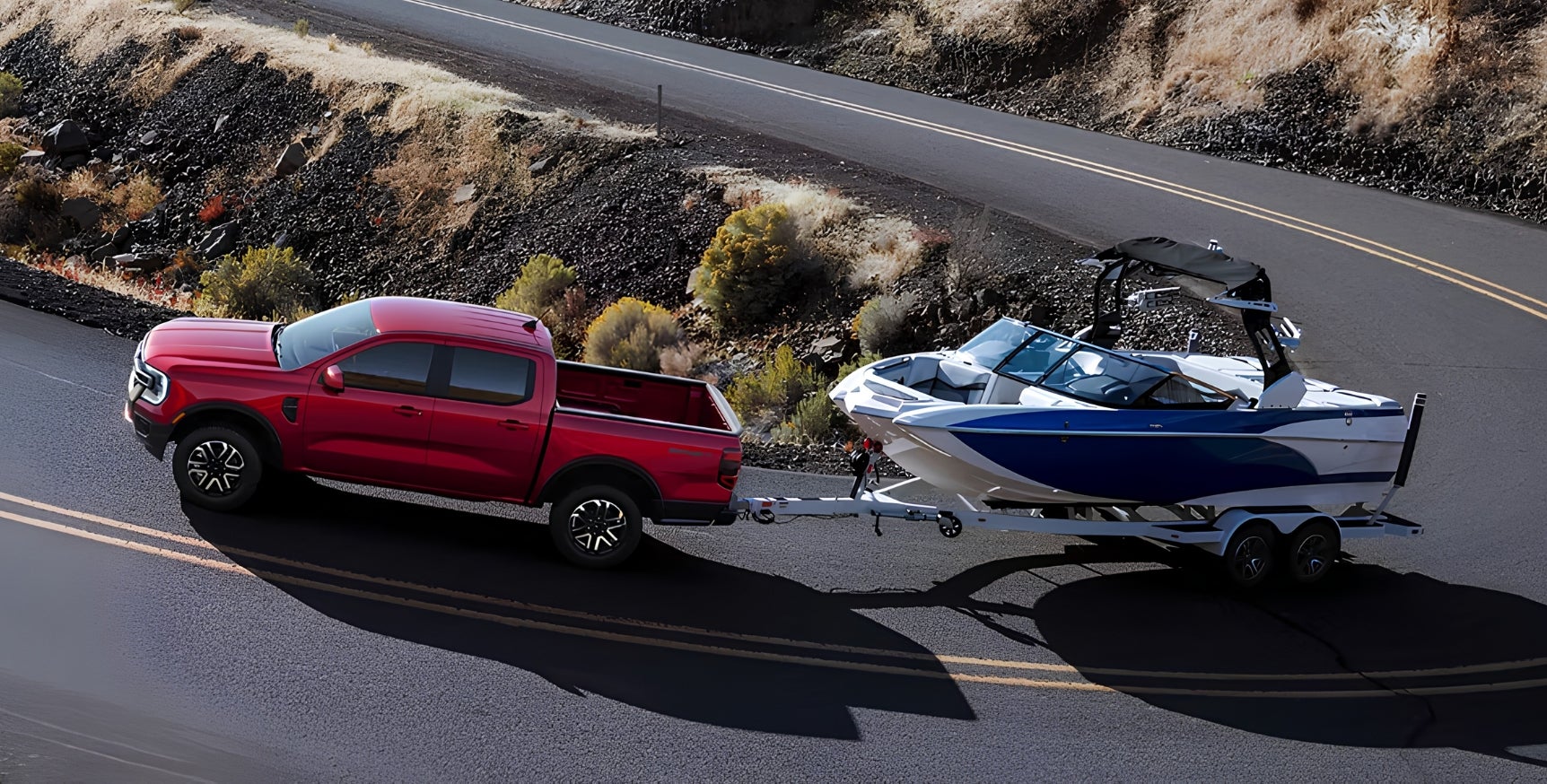
The midsized truck has taken off in popularity in recent years, mainly with drivers who want the added versatility but don’t need a full-sized pickup’s heft, higher capability, or increased sticker price. People who have a smaller trailer to pull – or who find themselves making frequent runs to the home improvement store appreciate having the solution parked right in their driveway when such needs arise. While there are quite a few contenders in the segment, the Ranger makes a great case for itself by leading in many of the categories that today’s buyers care about. But with competition such as the Toyota Tacoma, Chevrolet Colorado, and Nissan Frontier, it’s clear that pickup shoppers have a number of viable choices in the 2026 model year. We set out to contrast the Ranger with those competitors, with a focus on the traits that buyers look at most closely: cost, value, capability, and space. Note that our comparisons involve the lowest-cost trim with four-wheel drive plus a crew cab body, unless mentioned otherwise.
Shop Ford Ranger
MSRP and Value Retention
The manufacturer’s suggested retail prices for these competing trucks don’t vary much from one another, which supports the notion that they’re on a similar quality level. The Chevy Colorado has the lowest sticker ($35,700), while the Tacoma has the highest ($37,105). The middle ground is taken up by the Frontier ($36,550) and the Ranger ($36,850).
Of course, that initial outlay is one thing, while the cost of ownership over the years is the true marker of value. Depreciation is unavoidable, and we turned to CarEdge for some insight. According to them, the Tacoma fares best, losing just 22% of its original valuation over five years; the Ranger comes in second with a 28-percent depreciation rate. The others don’t fare as well, with the Frontier dipping all the way to 37% over the same period. The Ranger’s domestic rival, the Colorado, suffers a staggering 48-percent plunge in value over those five years.
Powertrains
The powertrain trend for this segment is a turbocharged four-cylinder engine, which all but one of the models mentioned here have. The outlier is the Nissan Frontier, which continues to employ a naturally aspirated 3.8-liter six-cylinder with an output of 310 horsepower and 281 lb.-ft. of torque. In comparison, the Ranger’s base 2.3-liter powerplant puts out 270 hp and 310 lb.-ft. of torque, beating out the 228 hp and 243 lb.-ft. from the Tacoma’s 2.4-liter engine. The Colorado makes a strong showing with a 2.7-liter engine that produces 310 hp and 430 lb.-ft. of torque. Only the Ranger offers an engine upgrade: the higher trims are eligible for a turbocharged 2.7-liter V6 putting out 315 hp and 400 lb.-ft. of torque.
Towing and Hauling
If you’re shopping in this segment, chances are good that you plan to pull a trailer at some point. The top two in towing capacity are close, with the Colorado able to pull up to 7,700 pounds while the Ranger can handle 7,500. The Frontier is rated to tow as much as 6,960 lb., but the Tacoma can’t get past 6,400 lb. Payload capacity is a slightly different story, with the Ranger coming out on top with a capacity of 1,763 lb., which beats the Colorado (1,684 lb.), Tacoma (1,500 lb.), and Frontier (1,330 lb.).
Reviews and Owner Satisfaction
The well-respected automotive information source Edmunds rates the Ranger at 6.9 out of 10, edging out the Tacoma (6.8 rating). The Colorado sinks to 6.4 on this scale, with the Frontier’s 5.6 rating putting it at the bottom of the pack. The feedback that actual drivers of these pickups have shared with Edmunds doesn’t stray far from this ranking: Ranger drivers give it a 4.4 out of 5 on the site, exceeding the Tacoma’s 4.2 and the Frontier’s 3.9. The Colorado brings up the rear at 3.6.
MotorTrend’s overall rankings for 2026 midsized trucks follow the pattern, with the Ranger on top – although in this case it’s followed next closely by the Colorado. The Tacoma comes in fifth, with the Frontier occupying the lowest spot (out of seven). The other models in MotorTrend’s ranking were the GMC Canyon (third), Honda Ridgeline (fourth), and Jeep Gladiator (sixth).
Passenger Volume
Not every light truck is a work vehicle; many are daily drivers for commuters, families, and folks who don’t own a trailer. For these consumers, interior space can be of high importance. The Ford Ranger leads in a lot of the dimensions, such as headroom, with 41.0 inches. Taller occupants will appreciate that more than the Tacoma’s 39.7 inches, the Frontier’s 39.9 inches, and the Colorado’s 40.3 inches. Legroom follows the same pattern, with the Ranger offering 43.7 inches in the front row to beat both the Tacoma (41.8 inches) and the Frontier (42.3 inches). Back rows in midsized trucks aren’t always suited to adult passengers, but the Ranger makes a good showing with 34.6 inches of rear legroom, compared with 33.7 inches in the Tacoma and 33.2 inches in the Frontier.

May not represent actual vehicle. (Options, colors, trim and body style may vary)
MSRP is the Manufacturer's Suggested Retail Price of the vehicle. Dealer sets final price. Sales tax, title, and registration fees are not included in vehicle prices or manufacturer offers that appear on this site and must be paid by the purchaser. $784 doc & title prep fees apply to all vehicle sales, including manufacturer offers that may appear on this website. MPG ratings are EPA estimates. Actual results may vary for many reasons, including driving conditions and how you drive and maintain your vehicle. See full site disclosure here.